Sunday, 29 January 2012

Planting Trees


When I was at school there was a scheme called Plant A Tree in ‘ 73, from what I can gather it was started to help combat the ravages caused by the spread of Dutch Elm Disease in Britain. Through my school I bought a Silver Birch but I can’t remember if I had an actual tree to plant, or just paid money to have the tree planted in a new wood. I do remember feeling that there was something special about planting trees. The campaign was the genesis of The Tree Council. There were a wide variety of stamps and First Day Covers

Here are some comments from the House of Commons about Plant a Tree in 73 with some interesting facts and figures.
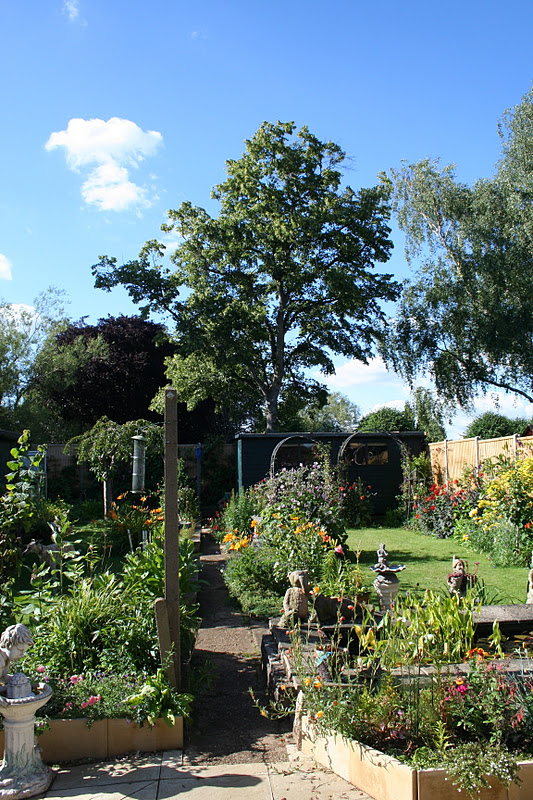

I have also just discovered that the Silver Birch has a relatively short life span so I’m not sure if my tree survived but there is a beauty in the graveyard behind my parents’ house that gives great pleasure to the viewer in all seasons, in fact they have a lovely assortment of mature trees just over the fence. Through the Woodland Trust I had three oak trees planted in a wood near Daventry in memory of a former partner, a man who loved life and lost it too soon. I’m sure he would have liked the notion of living on as a strong oak with a whole forest for company.


Now, with a reasonable sized garden, I’m happy to say that I have followed the advice given to characters in the story “Big Man” by Kathy Page and have planted fruit trees, although I haven’t danced round them. I have two apple trees, two plum trees, a fig tree and a cherry tree, one day I’d love a small orchard but my small collection of fruit trees will have to do for now!


To celebrate the anniversary of Queen Elizabeth ll's 2012 Diamond Jubilee, the Woodland Trust is helping millions of people across the UK to come together to plant 6 million trees. I love the idea of planting trees and as a member of Beanfield Artists I made an application for a community tree planting pack. Just before Christmas I discovered that I had been awarded a pack of 105 All Year Colour trees to plant but the Woodland Trust needed to know where they were going to be planted.


The news came on the day I was talking to Rosalind Stoddart, who was planning to plant trees along the new boundary line of her new field situated behind her house. Ros has generously donated an area in her new field as the site to plant the trees and I'm overjoyed to know that these trees have found a home where they will be enjoyed by the community.


Ros is passionate about the arts, trees and the environment, if you are an artist or creative practitioner coming to help with the planting, Ros is keen to hear your ideas for events / activities that could take place on the field in the months to come. 
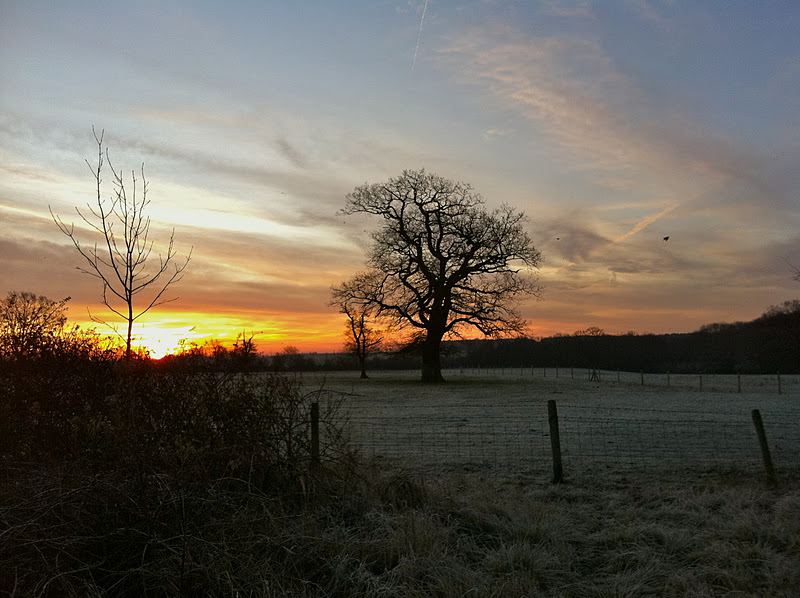

There seems to be a deep connection between people and trees, BBC Radio Northampton was quick to pick up the story and during the early part of a frost sprinkled morning their roving reporter came to talk to us about the Jubilee Woods tree planting day which will take place on February 18th. Since then we have been delighted with the response to our request for volunteer tree planters willing to come and create this new Jubilee Wood.


You can find out more about Rosalind Stoddart FRSA Independent Cultural Engineer and the exciting projects she is currently undertaking here and I know she has many exciting plans, events and workshops in the pipeline!

Shortly after the broadcast I received a call from the wonderful Ann Leonard asking if we had given any thought to protecting the trees from the wildlife! I told her we had thought about it but had no funds for the project. She said in a mysterious tone 'let me think about it and get back to you." The next day she rang again to say that she would donate part of the costs and her colleagues at AES Europe a local company, based in Corby, but with very strong business links to Brigstock, would match her donation. 


The company has a commitment to encouraging lake and pond owners and managers to establish native plant species both in the water and on the surrounding margins.  They grow their own plants from carefully collected UK seed at a private nursery in Brigstock.  Both Ann and AES Europe are very happy to support the Jubilee Tree Planting event and the Woodland Trust in this venture and are supplying the supports and protective mesh for the young trees. You can find out more about AES Europe here. I must give a huge hug of thanks to Ros and AES Europe Proprietor - Mr Robert Cockroft, Operations Manager - Mr Anthony McKenna and Nursery Manager - Ms Ann Leonard for helping to create this new area of woodland!


It’s not too late to apply for Jubilee Woods Tree Planting Packs so follow the link to find out how.
and here is some information about National Tree Week


Friday, 27 January 2012

Dazzled by Camoufleurs

My January project with the Year 4 students at Priory Lower School in Bedford has been camouflage. As there are nautical links on my Mum's side of the family and because many artists were employed as Camoufleurs by the Navy during World War l, I thought it would be interesting to explore the evolution of Dazzle Ships


and artists like Norman Wilkinson CBE “who was placed in charge of a naval camouflage unit, housed in basement studios at the Royal Academy of Arts. There, he and about two dozen associate artists and art students (camoufleurs, model makers, and construction plan preparators) devised dazzle camouflage schemes, applied them to miniature models, tested the models (using experienced sea observers), 

and prepared construction diagrams that were used by other artists at the docks (one of whom was Vorticist artist Edward Wadsworth) in painting the actual ships. In early 1918 Wilkinson was assigned to Washington, D.C. for a month, where he served as a consultant to the U.S. Navy, in connection with its establishment of a comparable unit (headed by Harold Van Buskirk, Everett Warner, and Loyd A. Jones)(Hartcup 1980; Behrens 2002, 2009; Wilkinson 1969).” 


I found lots of interesting photos and information in this Blog by an animator called Dii We looked at prints by Edward Wadsworth and tried to pick out the camouflaged elements in his work. After a good discussion about camouflage in nature and as used by the military the children made drawings and collages in preparation for the activity I have planned for the following week.

  
I had been particularly inspired by these models in the


This had given me the germ of an idea so I enlisted my Dad’s help (yet again!) saying 
“Dad, do you think you could make me 30 simple boat models out of scrap wood?”

Dad “When do you want them by?”

Me “Next week, Friday, please…they only need to be very simple…..”


By the second Friday all the boats had been made and the children made a wonderful job of transferring their 2D designs onto their 3D models. When I work with them again  later in the term  I think we will make screen prints or collographs based on their drawings. Having worked with the children in this class in previous years they have always displayed a strong design sense.


Saturday, 31 December 2011

Close to the Skin - Patterns & Petticoats - Snibston CPD

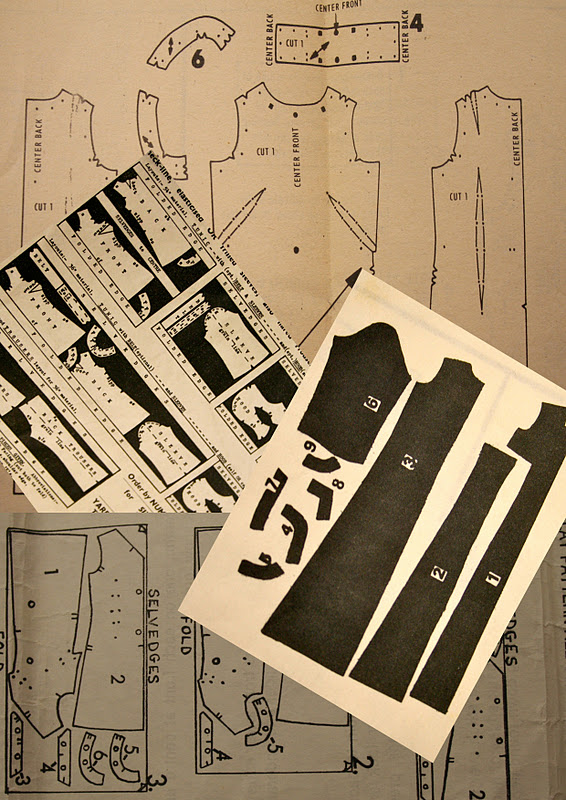
Apart from looking at the collections under my own steam and meeting with my Mentors Barber-Swindells, I was also able to select items from the Collections Resource Centre. I was keen to look at old shift patterns and the some of the petticoats that were supported by hoops or worn under / over the bottle cages. Sarah Nicol, Inspiring Collections Officer, Leicestershire County Council, Communities and Wellbeing was a wonderful guide through my chosen items and we had a wonderful time talking about the items she had brought to show me.
 
I was very taken with the layout instructions and have a feeling I'll be coming back to these in the near future, especially as I have a whole box of vintage Vogue patterns stashed away! As I don't have the figure for couture or faith in my pattern following abilities these elements these may just become part an image but there is something very tempting about these maps of the body.
I found the shapes, crumples and wrinkles fascinating and was very drawn to the colours an textures of the old cloth. There was something playful, joyful about the swing and swish these petticoats create when in motion. I was amazed at the many variations on a theme, I thought about the restriction, freedom and support these garments brought to the wearer and even though they had lost their crisp newness they still whispered of display and attraction, dance and drudgery.
It is hard to imagine just what this metal clasp 
must have felt like next to the skin
the metalwork and the rusting hoops were 
a strange reminder of the male and female.
There was also something very moving about the signs of wear and tear. The patches, darns and repairs encased beneath skirts, the bottle cages, bustles and padding all hidden extensions of the body. Shape shifters.
Then there was the surprising, joyous red flannel, offering protection from the cold but it was also believed that the colour itself offered protection from disease and could be used to draw out inflammation.
 
It is quite bewildering to think about the amount of time it must have taken to dress and curious that many items of clothing were either there to enhance shape or protect the fabric from the body.

I was only able to make the visit to view my chosen items two days before my proposal was due to be completed and I had to write something to send to Claire and Steve the day before this visit was to take place. I didn't feel ready, nothing was flowing and to compound my anxiety, my partner took a tumble down the stairs and had to be rushed to A&E. Thankfully he hadn't broken his shoulder, just partially dislocated it, but seeing him lying in a grey, forlorn heap at the foot of the stairs did fracture my powers of thought! Whilst trying to get my thoughts in order, I felt compelled to experiment with the notions of soft (wadding, fabric) and hard (machine stitches) as a way of sorting out the jumble of seams, shifts and pattern pieces living in my head! 
I enjoyed the raw edges and the flyaway threads, but I think Claire and Steve were a bit bemused by my strange samples and having seen their meticulous work, I'm not surprised!
However there are just some times when it's important  to follow your own processes and ways of working, these samples are fragments of thought, beginnings not finished ideas.

Wednesday, 30 November 2011

The Butterfly Net & The Bottle Cage

During one of my Snibston visits I brought my friend Sarah with me as I though she would really enjoy the diverse nature of the collections to be found in the museum. 
Together we tested out all of the interactive elements we could find. The skeletal cyclist and the plasma ball were particularly enjoyable.
On the same visit we spoke to John on the front desk and asked him to tell us more about the work of the miners and the nature of the community that existed before the pit closure. He had been in the navy and when he left he became a miner. He told me that it was “the best, the funniest, the hardest job” and he had loved the camaraderie he shared with his workmates.
He told us about an old mining tradition – when a young man started in the mine he would cut a piece of wood from a beam and take it home as kindling. This kindling was known as cock wood. I was curious about the role the women played in the community and he said they really ruled the roost as they looked after the money, kept the home and hearth going.
This made me think about the male and the female, the mining and the fashion collections and also of the symbolism of the Earth Mother which Encyclopedia Britanica describes as follows:-

"Earth Mother,  in ancient and modern nonliterate religions, an eternally fruitful source of everything. Unlike the variety of female fertility deities called mother goddesses, the Earth Mother is not a specific source of vitality who must periodically undergo sexual intercourse. She is simply the mother; there is nothing separate from her. All things come from her, return to her, and are her.
The most archaic form of the Earth Mother transcends all specificity and sexuality. She simply produces everything, inexhaustibly, from herself. She may manifest herself in any form. In other mythological systems she becomes a more limited figure. She becomes the feminine Earth, consort of the masculine sky; she is fertilized by the sky in the beginning and brings forth terrestrial creation. Even more limited reflections of the Earth Mother occur in those agricultural traditions in which she is simply the Earth and its fertility."
At times I have I felt as though I've been moving through the museum like a child with a butterfly net, capturing ideas. Some thoughts are half-formed, slipping away as soon as I try to net them, whilst others shift and change  making different strings of meaning, leading me to more thoughts and ideas.
I am intrigued by the idea of connecting the male and the female, the mines and the corsetry, lightness and weight, fragility and strength. Coal and corset are also potent instruments of change and transformation. 
I've been contemplating layers, above and below, inside and outside (garment / mineshaft), power (mining, heat, energy, finance, status), tunnelling through - from soft surface to hard hot darkness. The pipes that carry heat, air or water have also been on my mind.
Then there are thoughts about the corset as support structure – like beams inside mines – holding the body up whilst creating a confined space inhabited by the body. I have been making visual notes to myself, trying to retain every spark that has been ignited by this journey.
The shift is still important, it lays beneath the corset giving the memory and illusion of freedom. Once the corset is removed, movement is freer but support is diminished. The mine shaft and the work of the miners share a similar dichotomy, the work is dangerous, the spaces are confining, yet the money earned, the skills required and the closeness of the workers offer certain freedoms. 
When I asked John what effect the pit closure had on Coalville and he said without the pit work the miners no longer bought their twist of tobacco from the tobacconist, their quarter of sweets from the sweetshop, their loaf of bread from the baker, it wasn’t only jobs that were lost, many other businesses were wiped away as livelihoods were intimately connected.