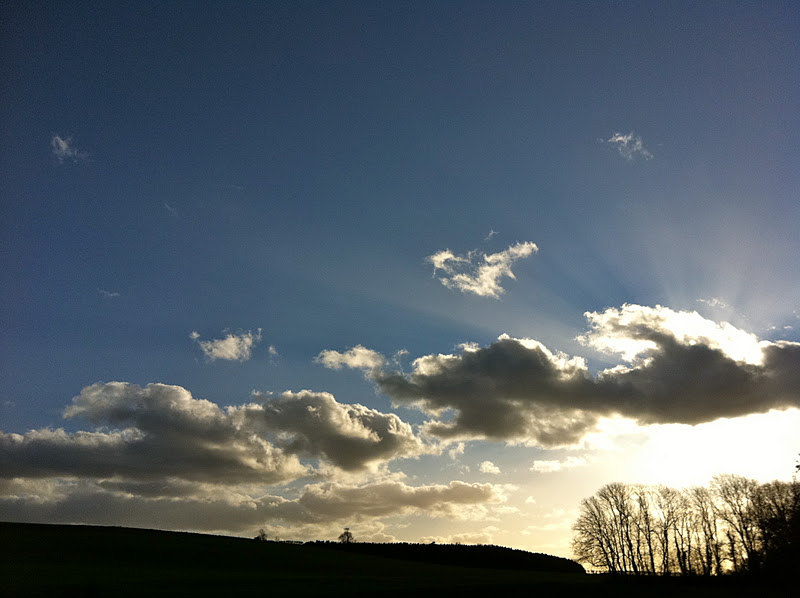
I am currently working with Back to Books on a project which takes the Brampton Valley Way as it's focus. At the moment the activities are largely concentrated around walking, cycling and exploring the countryside in and around the Valley Way. There is something about this stretch of land, the site of a former railway, that seems to call to me, I feel liberated, excited, longing to make something that marks my sense of contact with the landscape. I find this strange as I've always been figurative, interested in people and the body, perhaps feeling a bit out of sorts with my own physicality has made me change perspective. The landscape may not be everyone's cup of tea, it's pretty flat, at times (winter) it takes on a greyish hue and the wind that whips across it can be bitter, but I love it.

Apart from acting as Project Coordinator I am running a series of sessions called Remake / Remodel, some of the sessions will incorporate upcycling but the most recent one has been using felt to create vessels which express something about the landscape. With this in mind, I thought it prudent to make some test pieces in the studio. Whilst working on them I remembered that during the Invisible Threads project I came across a family connection to Witney, and through the Fowler family, to the blanket industry.
Wonderfully Curious - the Witney Tuckers' song
Joseph Fowler was the composer of 'Wonderfully Curious', the Witney tuckers' song. He was
himself a tucker in the Witney blanket industry who worked at West End Mill and is thought to have
been born around the time of the Battle of Waterloo (1815). The song was sung by him at the
annual Tuckers' Feast held on Shrove Tuesday, which was a very old custom in the town. John
Seacole, Fred Middleton, Jack Tooley and Cyril Nunn followed him in singing the song in
succeeding generations. They sang the verses, with the tuckers joining in the choruses. The song
was last performed in the 1980s, when the Feasts came to an end.
Wonderfully Curious
The wondrous globe on which we live
Is quite surrounded everywhere
With something quite invisible
It's called the atmospheric air.
The air is fluid light and thin,
Which forms of gas it does combine:
It Carries sound in order well
When put in motion it is wind.
Chorus:
Oh! How curious, wonderfully curious,
The laws of nature are indeed
Most wonderfully curious.
The wondrous globe on which we live
The seaman spreads his canvas sail
And as it moves on quick or slow
He calls it breeze, or storm, or gale.
But when it blows with so much power
Till all resistance is in vain
Blowing at 80 miles an hour
He calls it then a hurricane.
Chorus
The winds, the seas, the tempest blown
Are very changeable indeed...
But in the torrids they are known
One way for six months doth proceed,
Oft does the wind make ruins lie,
But their usefulness has been understood,
For in the Bible we are told
God guides the wind and rules the flood.
Chorus
This is a distant relative who I am led to believe, was one of Joseph's sons, Ezra Fowler. At 18 he was employed as a Fuller in Witney, he didn't stay in the blanket industry but went on to become the Gardener at the Rectory for the Reverend F. M Cunningham and remained in the employ of succeeding Rectors until the time of his death in 1919. I am not surprised he changed career as working with wool was hard, labour intensive work. It seems sad to note that Wool, or fleece, is now commonly being thrown out as a waste product in America.
Author and friend Kathy Page sent me a wonderful book 500 Felt Objects, for Christmas, the book and her visit in March, has inspired my further investigations into the mysteries and pleasures of working with felt. Trying to get a consistent thickness and surface is a challenge, as is 'drawing' with the roving. It is always a surprise to see what is revealed at the end of the process, colour doesn't always behave in the way you might expect, they can be too bright and you can over work or underwork the material. Here are some of my experiments with felt.
Felt vessels floating in the bath
Dusk - Two vessels felted together - colours have become a bit muddy, I had thin patches and places where the white fibres were being permeated by the red interior fibres as even after adding an extra layer.
Dusk vessel worked on with needle felting
This piece has began as a very thin vessel and has been added to and re-felted until it became very dense
Nocturn - quite loosely felted - I am tempted to felt it a bit more but then again, I quite like the openness of the surface
 Brampton Valley, Winter 2011
Snow Vessel

Sloe bushes, November 2011
Winter vessel, densely felted, smooth, tight surface
A field near Brampton Halt, December 2011
Sunset vessel
loosely felted with some needle felt detailing
Exploring felt has taken me back to the work of Joseph Beuys, here is a link to a very good paper about Beuys and the importance of felt in his work by Jenne Giles. I love the reasoning behind his use of the material, a song of poetry and practicality, plainness and strength.
"I think the tree is an element of regeneration which in itself is a concept of time. The oak is especially so because it is a slowly growing tree with a kind of really solid heartwood. It has always been a form of sculpture, a symbol for this planet."
Joseph Beuys to Richard Demarco, "Conversations with Artists" Studio International 195, no. 996 (September 1982), 46.
Tate Gallery Value Art Resource Beuys' Dictionary helpful when learning to read his work and as a collector or many and various things, his vitrines also have a huge appeal.